
by Maggie O’Farrell
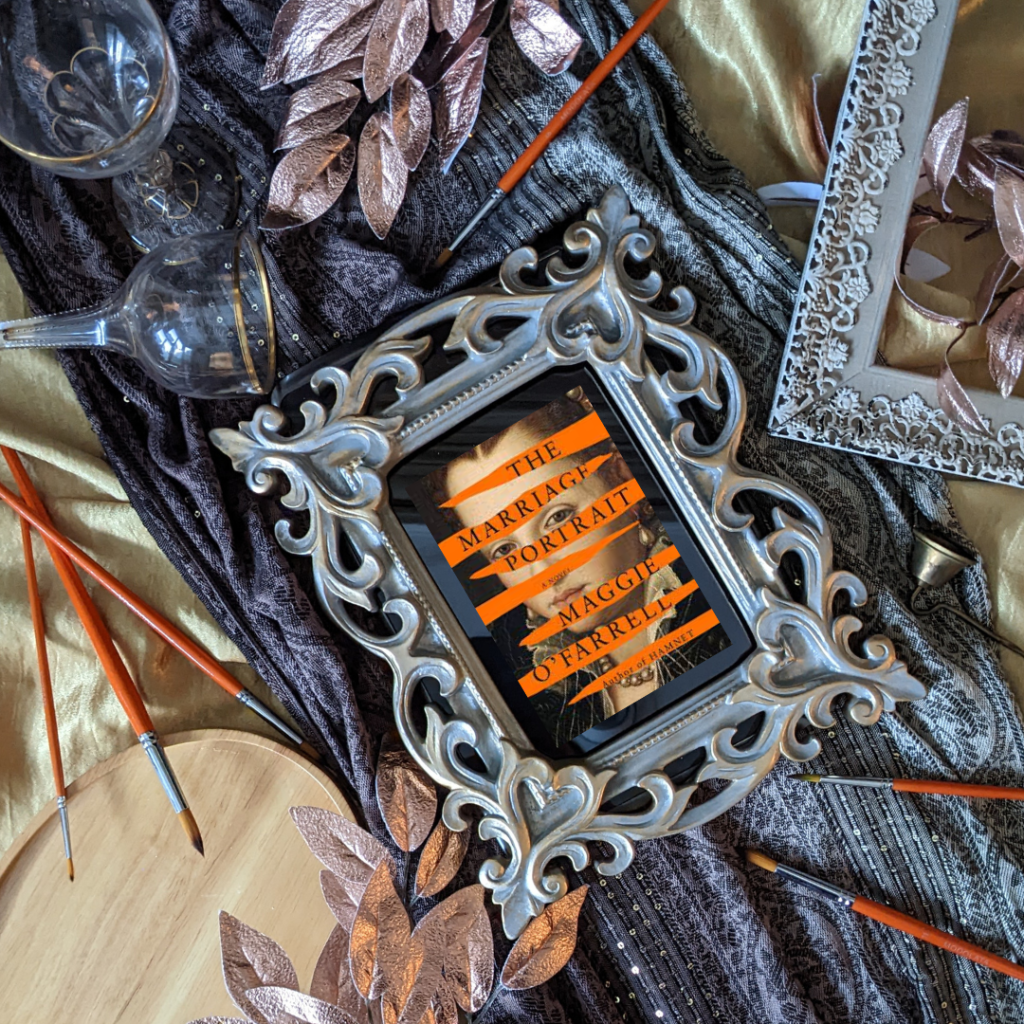
Overall: Hamnet was one of my favorites this year, so as soon as I realized that Maggie O’Farrell would publish The Marriage Portrait in September, I got on my library’s hold list. I’m so glad I did! I love historical fiction and stories about women’s lives, and this is a beautiful example of both. Set in the 1550s in Italy, the novel is told in two timelines centered around the same character. We meet Lucrezia, the daughter of the grand duke of Florence, as a terrified young wife whose husband has brought her to an isolated hunting lodge in the Italian countryside and as a cloistered young girl. How the unusual child, with an innate talent for art, ends up becoming the bride of a man who may – or may not – be trying to kill her is the stuff of the book’s plot. But Lucrezia’s interior world – her thoughts, her memories, her perspective on the world around her – is the book’s heart. Lucrezia’s short life and the paintings of her that survive inspired a spooky poem, “My Last Duchess” by Robert Browning, but little is known of her actual life; O’Farrell provides all the details in a wonderful author’s note.
Likes: I like my historical fiction detailed and thoroughly researched, and this is both. The Marriage Portrait recreates not just the sights but the sounds, smells, tastes, and textures of Renaissance Italy. Although Lucrezia’s life is privileged (and the reader, like her, barely perceives the depth of her privilege because we almost never leave the confines of the aristocratic spaces in which she resides), she has almost no control over it. She must go where her parents tell her, marry the man her father chooses for political reasons, and obey her husband, but her mind rebels. The book probes these psychological spaces in detail in the lush prose I grew to love in Hamnet. The dual timelines converge into a single narrative by the end, weaving together Lucrezia’s love of art, her desire for freedom, and her fear of the men who control her existence into a single satisfying tapestry.
Dislikes: there wasn’t much I disliked, but if you want a fast pace, a single timeline, or short, declarative sentences, this isn’t the book for you.
FYI: abusive relationships, misogyny, gaslighting. Death of a sibling.
 Liz Helfrich