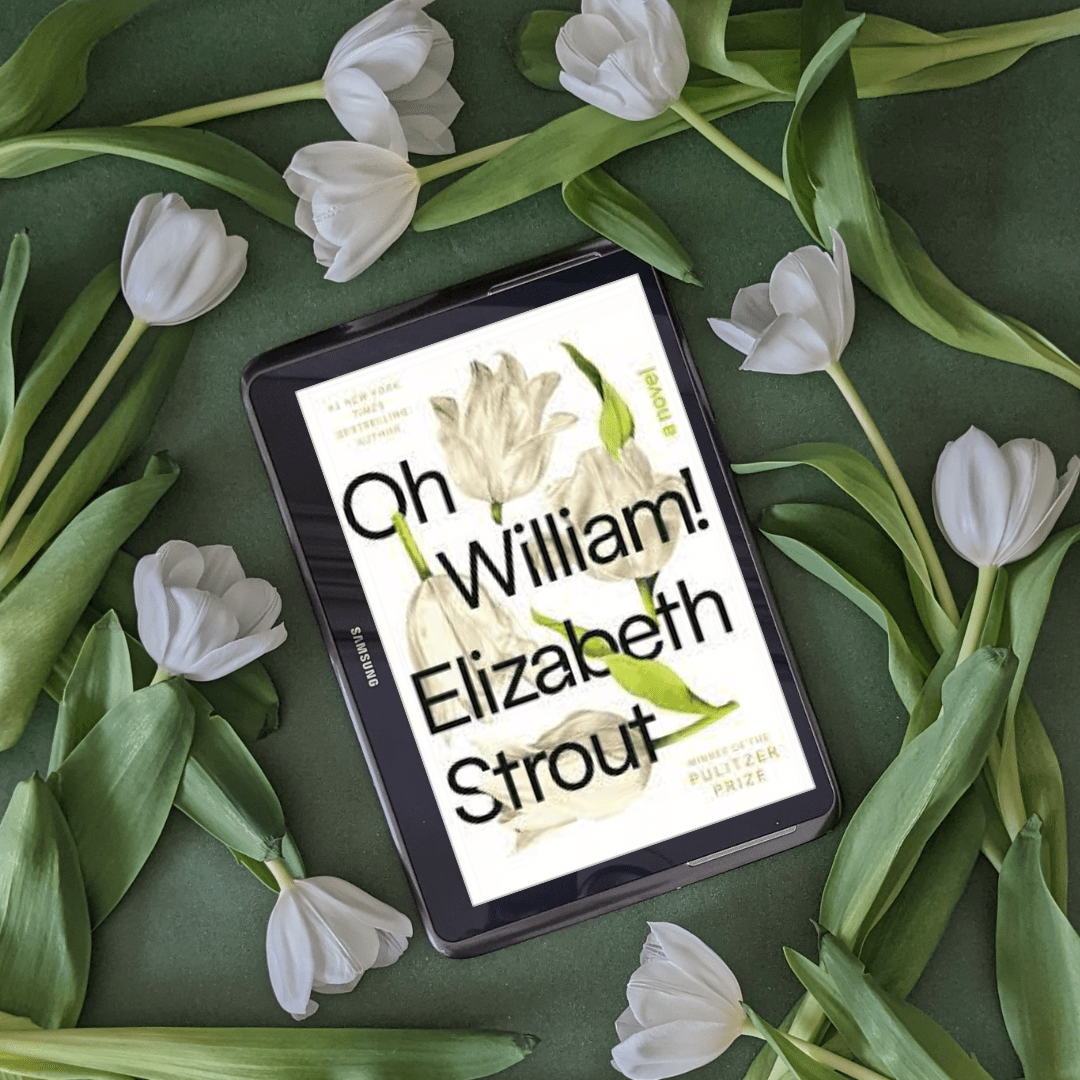
by Elizabeth Strout
Overall: I have loved Elizabeth Strout’s novels since I first picked up Olive Kitteridge years ago, and this latest slender volume is a wonderful addition to her oeuvre. This work of contemporary fiction picks up the threads left at the end of Strout’s earlier book Lucy Barton and explores Lucy’s life following the death of her second husband, David. Her first husband, William, has remained a part of her life, and she now finds herself drawn closer into his orbit as he enters a rough patch in his 70s. I don’t want to say too much more to avoid spoilers. If you haven’t read Lucy Barton, you can still read this book, although I think you will get more out of Oh William! if you have read it first. In my opinion, this book’s appearance on the Booker Prize short list is well-deserved.
Likes: Strout is such a keen observer of human behavior, and her books feel true to life in a way few authors manage. The characters are seen through Lucy’s eyes, and the reader gets a sense of how her preoccupations, blind spots, emotions, and history color the way she sees the people around her. Many of Strout’s books are about the complexities of love within families and the way that love can stretch and morph; her description of the decay and end of Lucy and William’s marriage, and the friendship that grows in its wake, fascinated me, as did her portrayal of Lucy’s complex relationship with her mother-in-law. The magic of Strout’s writing is that the book’s plot somehow moves forward even though we’re constantly circling back through Lucy’s memories.
Dislikes: this book is told in stream-of-consciousness, as though Lucy were narrating what is going on around her while we’re getting her unfiltered thoughts and opinions. I really enjoy this style, but I know it’s not to everyone’s taste. So I do recommend reading a sample if you’re on the fence.
FYI: references to past child abuse. Marital infidelity, loss of a parent, familial estrangement, child abandonment, and miscarriage all play a part in this book. References to the Holocaust and death camps.
 Liz Helfrich