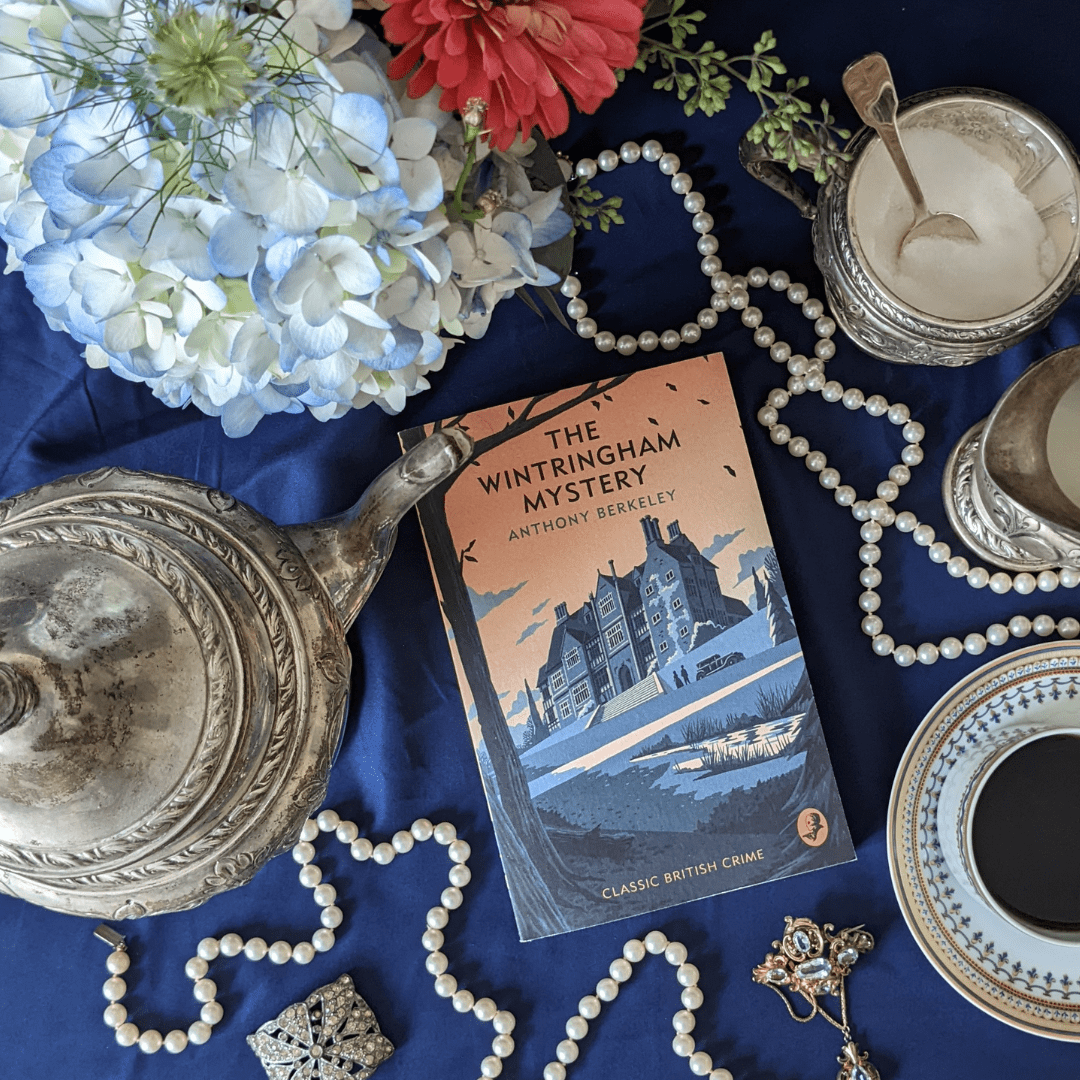
by Anthony Berkeley
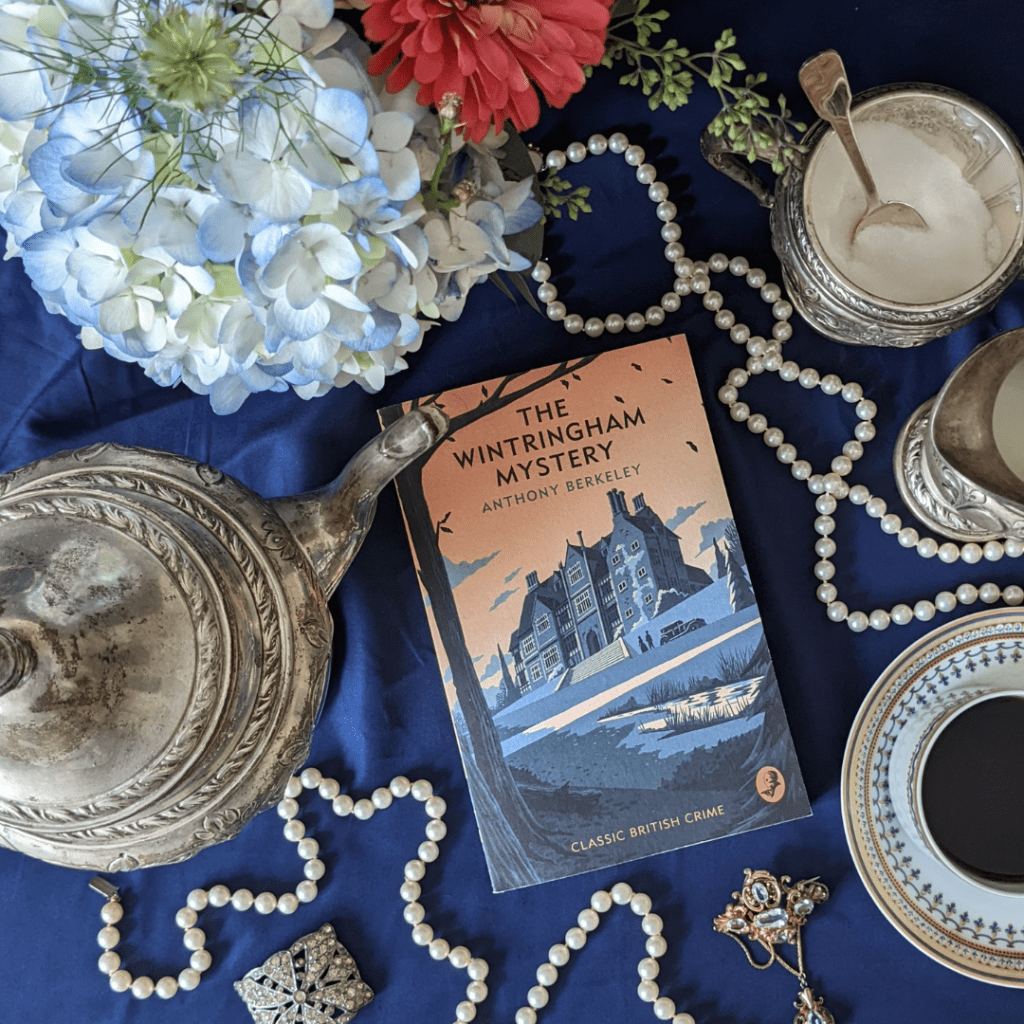
Overall: Originally published in the 1920s as an English newspaper serial, The Wintringham Mystery contest invited readers to submit their solutions to win cash prizes. This book’s claim to fame is that it stumped everyone, even Agatha Christie. I came across it at my local independent bookstore, which has been featuring all kinds of early 20th century detective fiction. The story has all the features I love best about this style of mystery: a grand house, witty repartee, loads of suspects, an amateur detective, a feisty older lady, and even a séance. If you enjoy Agatha Christie, Arthur Conan Doyle, Dorothy Sayers, or Josephine Tey, you will find this book a very entertaining read. Stephen Munro, a veteran of the Great War in his 20s, has burned through his inheritance and is reduced to taking on a job as a footman at the estate of Lady Susan Carey, Wintringham Hall. He discovers to his great dismay that Lady Susan is hosting a house party his first weekend on the job with several people he knows from his prior life. When one of them disappears, Stephen takes it on himself to find her while also preventing his former girlfriend Pauline from going through with what he views as an unwise engagement.
Likes: I adore the arch, witty asides and “dash it all” speech patterns of British literature in the 20s and 30s, and this is a prime example. No one in this mystery is quite what he or she appears, and it has the bonus of a kidnapping on top of a murder. The mystery has plenty of twists and turns and the are-they-or-aren’t-they romance between Pauline and Stephen gives the author loads of opportunities for fun dialog.
Dislikes: The best detective fiction in this style contains every element the reader needs to solve the crime, and I’m not sure this book passes the test. Part of the joy of reading Agatha Christie or Dorothy Sayers is being able to go back and uncover plot points or clues that build up to the final solution. I’d say no one hit on the complete solution in the original competition because Berkeley’s explanation, via Stephen, isn’t fully hinted at in the text.
 Liz Helfrich