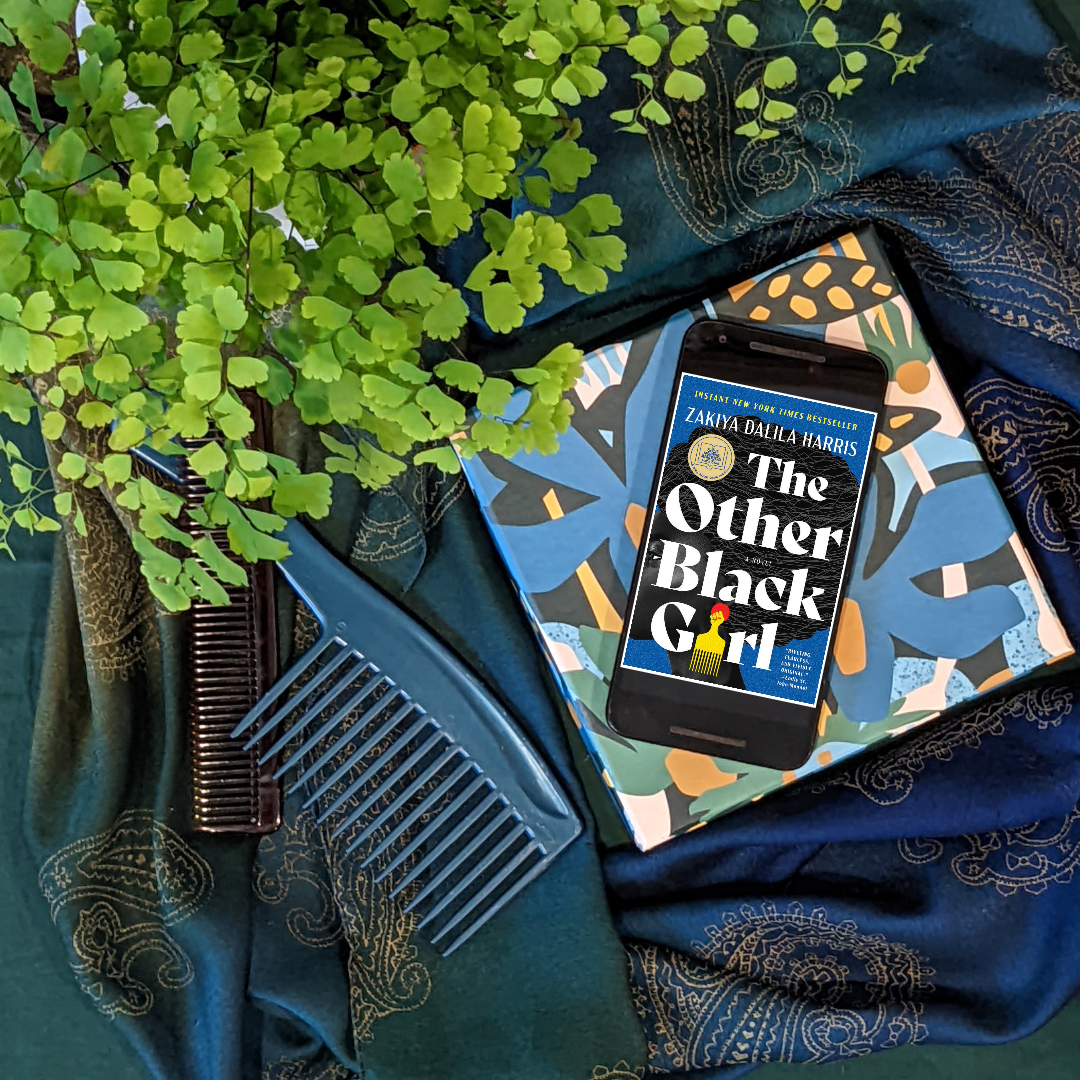
by Zakiya Dalila Harris
Nella, the only Black employee at published Wagner Books, initially feels elated when Hazel joins the staff. Then she starts receiving anonymous notes telling her to leave the company. And why won’t anyone tell her what really happened to former star editor Kendra back in the 1980s?
Likes: This book took me back to being new in my first career. As an assistant to a book editor, Nella’s trying to be a professional, impress her boss, and move up in the ranks, while also trying to find connection with her co-workers. Harris perfectly captures how it feels to be a frazzled, determined, self-conscious, questioning, smart, ambitious young woman. Nella’s full of contradictions and self-sabotages on occasion. I appreciated that Harris dealt with racism head-on, with details large and small about the burdens of being the only Black person in a workplace. And I loved the development of the relationship between Nella and Hazel, the “Other Black Girl” who arrives at the publishing house, which veers wildly between friend and enemy, with lots of stops at frenemy. The mashup of genres (is it a thriller? A satire? Literature? Horror? Speculative fiction?) is brilliant. The closest analogy I have is The Stepford Wives.
Dislikes: There are a lot of narrators, which broke up the momentum of the plot. The pace is uneven; parts of the book drag. To me, these were minor dislikes for a book that I really enjoyed reading, but if you’re looking for a propulsive thriller, this might not be for you.
Overall: Unsettling in the best way. You will be thinking about this book after you finish it! And if you have ever been “the only” in your workplace, The Other Black Girl will have added resonance for you. From other reviews, this seems to be a “love it or hate it” kind of book.
Quotes:
“Her colleagues, strangely, had made it clear very early on that they didn’t really see her as a young Black woman, but as a young woman who just happened to be Black – as though her college degree had washed all of the melanin away”
“But it was because he was never too eager – he didn’t feel the need to call all of the things racist all of the time, like a few of the white men she’d dated and known before him – that made Nella trust him the most”
 Liz Helfrich